This tool offers a series of questions. These serve to understand how complex, visible, or sensitive a project is; they qualify its organizational complexity.
These questions serve three main objectives:
In a few minutes, the tool allows you to know if your project requires a complete evaluation with «Boussole 21».
Please note: It is the responsibility of the project leader, their line manager, and the responsible Councilor to use this tool or to contact the Sustainability Sector to obtain the desired support in terms of sustainability.
The Sustainability Sector cannot be aware of all departmental projects: it is therefore up to the teams to report them and request appropriate support.
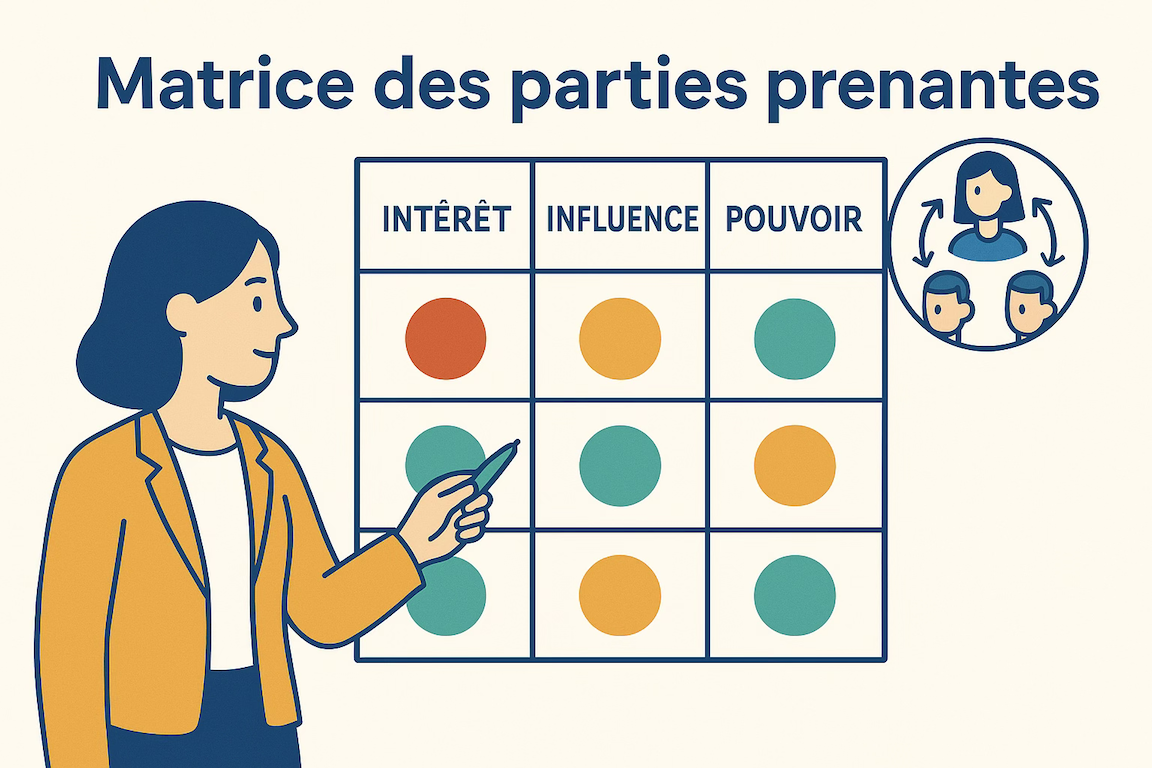
Depending on certain criteria, the actors surrounding your project can influence it. These are the stakeholders. When designing a project, it is essential to identify who will be concerned, involved, or impacted. This tool invites you to keep this idea in mind.
The following briefly presents the key principles to correctly understand the role of stakeholders, but the actual determination work will not take place here; you will not know who, but you could estimate the number of parties. The "Sustainability Matrices" tool is designed for this. The Sustainability Sector is available to support you in this process.
An actor in the territory may be interested or concerned by your project. They are directly concerned, a beneficiary, or impacted. They have:
An actor in the territory may have influence, an indirect power, to orient, facilitate, or counter your project. They have:
Finally, an actor in the territory may have the official power to decide, block, or arbitrate your project. They are:
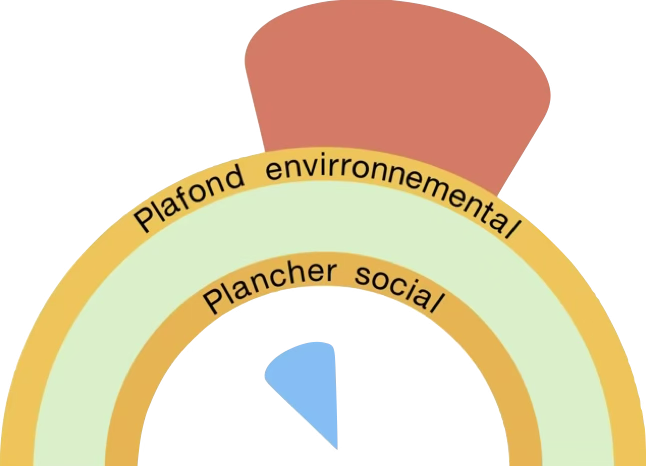
Sustainability includes a reflection on the environmental, social and economic impacts of projects. The assessment evaluates the extent to which the stakeholder can produce a:
This tool will ask you to answer it in a simple way, without concrete analysis. To go further, the " Matrices for sustainability " tool will allow more precision.
Biodiversity, soils, waters, energy, mobility, resources, emissions, pollution, nuisances, etc.
Social cohesion, integration, quality of life, inclusion, social acceptance, access, safety, health, living together, etc.
Local activity, jobs, short circuits, costs and benefits, maintenance, economic resilience, economic promotion, etc.
A sustainable project seeks to balance these three dimensions to create long-term value.
Answer the following questions to determine if your project requires an analysis with «Boussole 21».